
Myopia Management
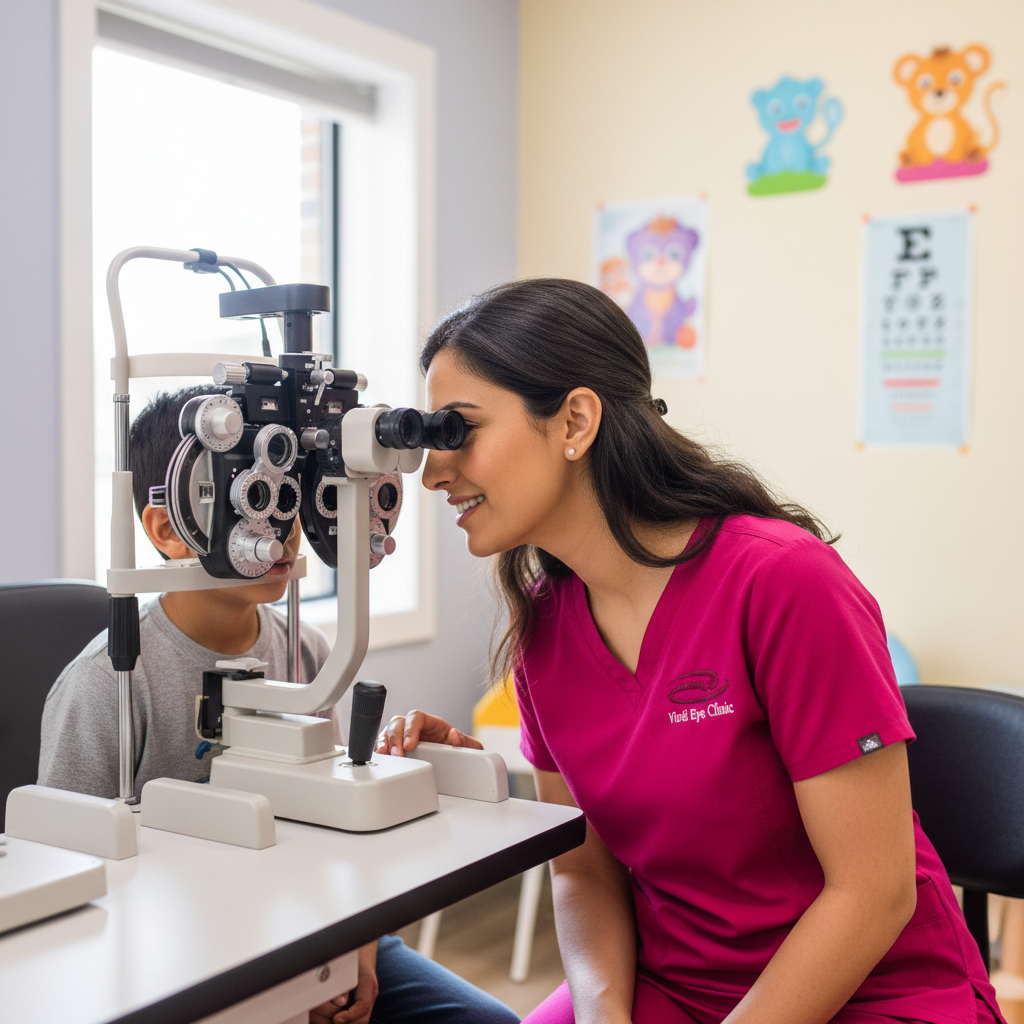
Helping young eyes stay on track. We offer four clinically proven treatments to slow myopia progression and protect your child's long-term vision.
Virdi Eye Clinic
👦 Pediatric Myopia Control
🔒 Your info is private and used only to contact you.
50%
of people may be myopic by 2050
3×
higher risk of serious eye disease with high myopia
71%
slower progression possible with early treatment

What Is
Myopia?
Myopia happens when the eye grows too long, causing light to focus in front of the retina rather than directly on it. Close-up vision stays clear, but distant objects appear blurry. It typically begins between ages 6 and 12 and can worsen yearly during childhood.
High myopia raises the long-term risk of glaucoma, cataracts, retinal detachment, and myopic macular degeneration.
Signs to Watch For
- Squinting — to see the board at school or the TV from across the room
- Sitting too close — holding books or devices very near their face
- Headaches — frequent complaints after reading or screen use
- Falling behind — struggling to see the whiteboard, affecting learning
Risk Factors
- Genetics — 50% chance with 2 myopic parents; 33% chance with 1 myopic parent; 25% chance with no myopic parents
- Insufficient time outdoors
- Prolonged near work, reading, or screen time
- Poor lighting levels
Clinically Proven
Myopia Control
We offer four evidence-based treatments tailored to your child's age, lifestyle, and prescription. Each option is supported by peer-reviewed clinical data.
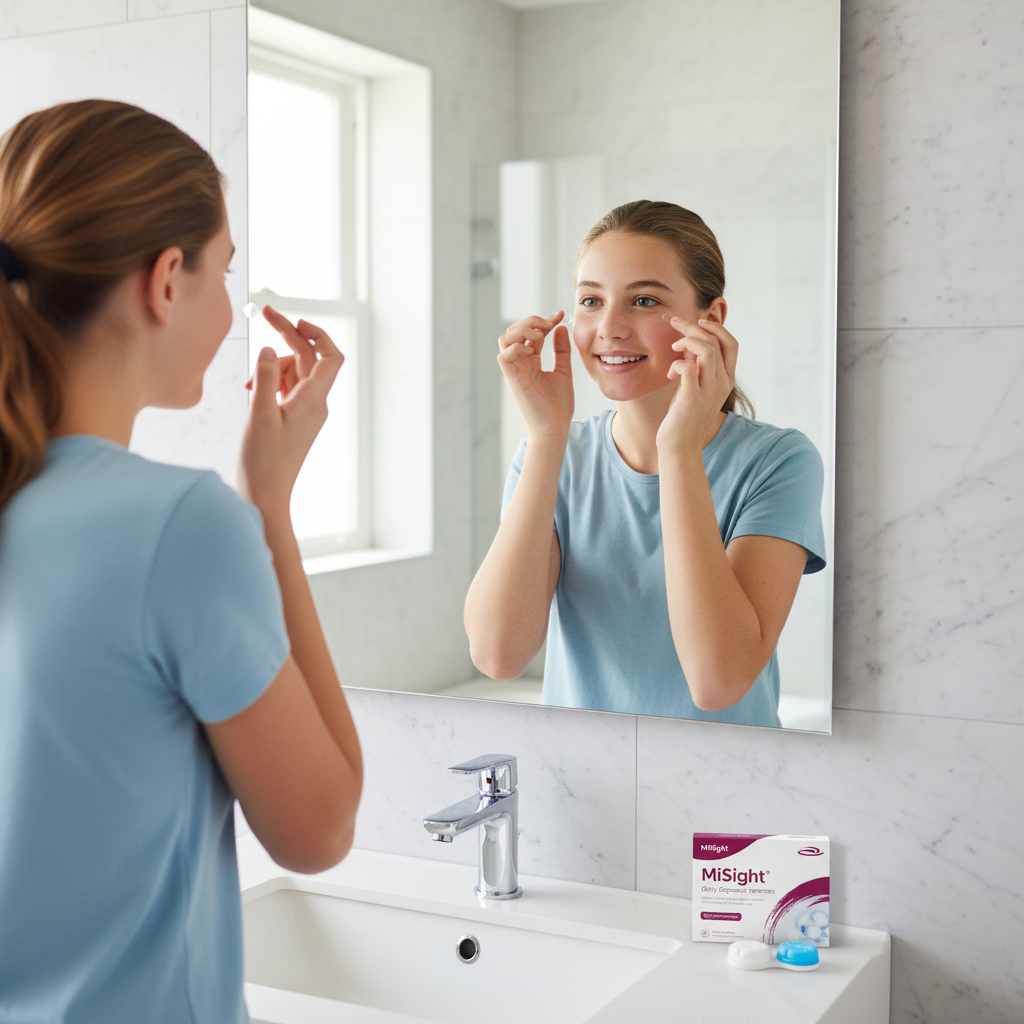
MiSight® Contact Lenses
MiSight 1-day lenses are the world's first soft contact lens clinically approved to slow myopia progression in children. They use a unique ActivControl® optical design — dual-focus zones that simultaneously correct vision and send a signal to the eye to slow its elongation. In clinical trials, they reduced progression by an average of 59% compared to standard lenses.
Who it's for: Ages 8 and over, new to contact lenses
How it works: Worn during waking hours, discarded daily
Best for: Active children who prefer not to wear glasses
Evidence: 7-year clinical trial data available
Orthokeratology (Ortho-K)
Ortho-K lenses are specially designed rigid contact lenses worn only at night while your child sleeps. They gently reshape the front surface of the eye (the cornea), allowing clear, glasses-free vision throughout the day. They also reduce the stimulus that drives eye elongation. When lens wear stops, the cornea gradually returns to its original shape.
Who it's for: Ages 8 and over, all prescription ranges
How it works: Worn overnight, removed in the morning
Best for: Sports, swimming, or lens-free daytime activities
Evidence: Strong clinical evidence across multiple studies
Low-Dose Atropine Drops
Atropine eye drops have been used to manage myopia for decades. At low concentrations (0.01%–0.05%), they slow the biological processes that cause the eye to elongate, without significantly affecting near vision or pupil size. They are applied to both eyes once each evening. Studies show they can reduce myopia progression by 50–77% with minimal side effects at low doses.
Who it's for: All ages, including young children
How it works: One drop per eye each night
Best for: Children who aren't ready for contact lenses
Evidence: ATOM and LAMP study data supports use
Myopia Control Spectacle Lenses
Advanced spectacle lenses such as Essilor Stellest® lenses use innovative optical designs to correct vision in the central zone while creating a peripheral defocus effect that signals the eye to slow its growth. They look and feel like ordinary glasses and are worn throughout the day. A practical option for children who aren't yet suitable for contact lenses.
Who it's for: All ages, ideal as a first step
How it works: Worn as regular glasses, full time
Best for: Younger children or those new to myopia
Evidence: 2-year clinical trials show up to 71% slowing

How We Choose the
Right Option
We Consider
- Age and prescription
- Lifestyle and activities
- Rate of progression
- Readiness for contact lenses
- Family preference
What to Expect
- Full myopia control assessment
- Tailored treatment plan
- Regular monitoring visits
- Adjustments as your child grows
- Open communication throughout
Lifestyle Tips
- 2+ hours outdoors daily
- Regular screen breaks
- Good reading distance habits
- Annual eye examinations
Ready to Find the
Right Treatment?
Book a complete eye exam with dilation with our team — we'll assess your child's prescription, lifestyle, and eye health and guide you every step of the way.